
There’s something about 4am that feels louder than any time of day.
The world is silent, but my mind isn’t.
It never really switches off anymore. It hums, it replays, it questions. It lists everything I’ve done and everything I might have missed. It’s where doubt lives, quietly waiting for the rest of the world to go to sleep so it can speak the loudest.
And this morning, it’s Easter Sunday.
So instead of lying there fighting it, I got up.
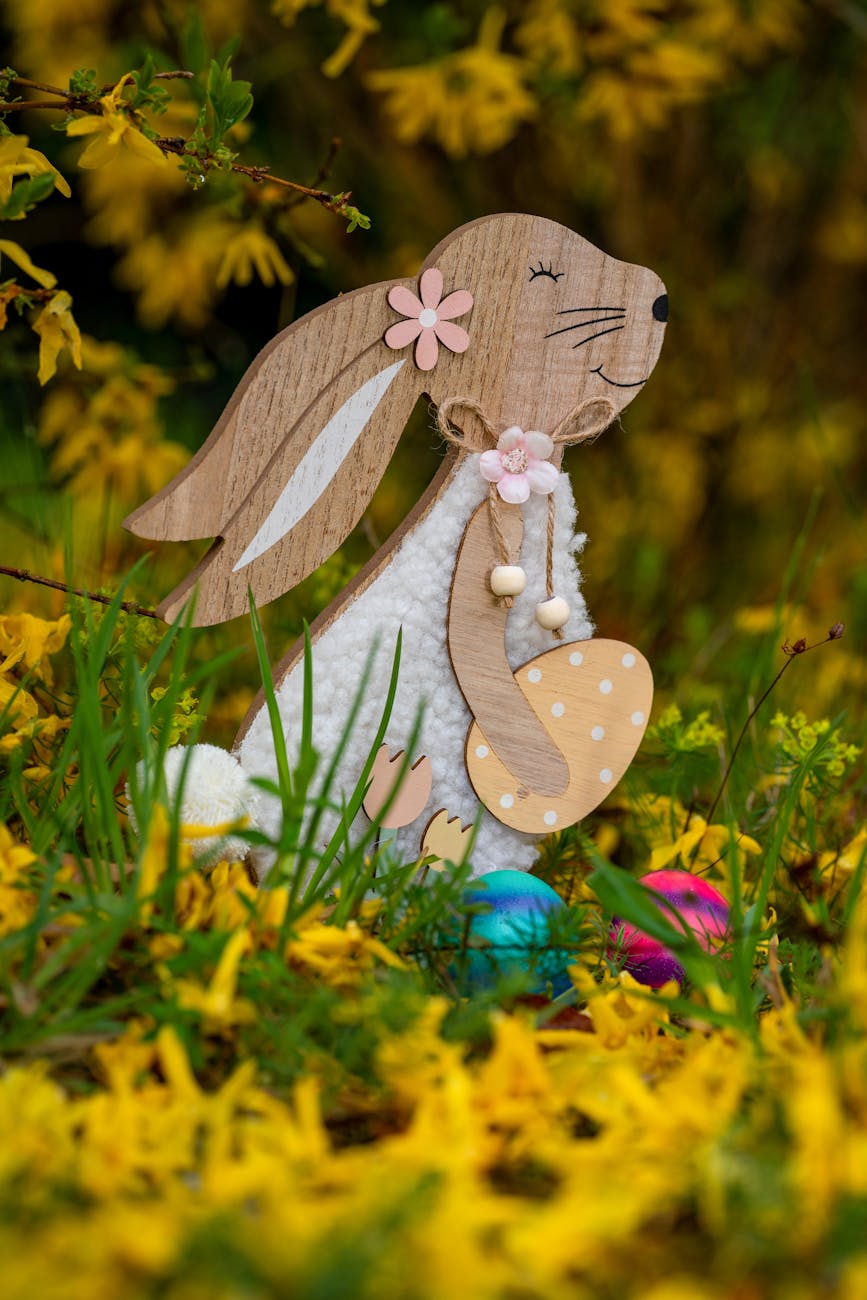
I padded through the house in the dark, careful not to wake anyone, and became the Easter Bunny. Balloons tied, little gifts placed, clues scattered in just the right spots. Not over the top this year… but enough. At least, I hope it’s enough.
That word again. Enough.
Because when you’re both mum and dad rolled into one, “enough” becomes a constant question. There’s no one else to share the mental load with, no one to say, “you’ve done plenty.” It’s just me, second guessing in the quiet hours, wondering if I should have done more, added more, been more.
And somewhere in the back of my mind sits the awareness that for him, it probably doesn’t even cross his mind.
That’s the part that stings.
By 5:30am, I’m back in bed. The birds have started their morning chorus, soft at first, then louder, like the world gently waking up around me. My youngest has found her way in beside me, curled up, warm and safe, not quite awake yet. And for a moment, everything slows.
This is what matters.
But even in that stillness, the thoughts creep back in.
My eldest is out, staying at a friend’s after a night out. So I check my phone. Then check it again. Watching her location like it might somehow guarantee her safety. Hoping she’s had the best time, but praying she’s okay. That quiet anxiety that comes with letting them grow up, even when every instinct wants to pull them close.
And there I am, lying between two worlds.
One child still small enough to believe in the magic I’ve just created downstairs. The other out there, living her own life, needing me in a completely different way.
And me? I’m in the middle, questioning everything.
Have I done enough? Am I doing this right? Is there something I’ve missed?
The thoughts come in waves. Heavy ones. The kind that make you feel like you’re being watched, judged, measured by invisible standards set by people who don’t walk your path. Beady eyes you can almost feel, even if they’re not really there.
It’s exhausting.
But then I look at what is here.
A house filled with small touches of magic. A little one who will wake up beaming with excitement. An older one who feels safe enough to go out and live her life. A mum who got up at 4am, not because she had to… but because she cares that much.
And slowly, I remind myself:
This is enough.
Not perfect. Not extravagant. Not Instagram-worthy.
But real. Thoughtful. Full of love.
And maybe that’s the part I need to hold onto.
Because as long as my girls have me—showing up, trying, loving them in all the ways I can—then this Easter, and every other day, I am enough.
Even at 4am.
Author: jugglingmamadaily
Unexpected

There’s something quietly powerful about the moments we never plan for—the ones that slip into our lives without warning and change everything.
You don’t see them coming. There’s no checklist, no preparation, no perfect version of yourself waiting to be presented. Life is just… happening. Maybe you’re tired. Maybe you’re rebuilding. Maybe you’re just getting through the day as best you can. And then, out of nowhere, you meet someone.
Not in the way stories often tell it—polished and perfect—but in a real, raw, unexpected way.
And something shifts.
It’s not always dramatic at first. Sometimes it’s subtle—a conversation that feels lighter than anything you’ve had in a long time, a moment where you feel seen without having to explain yourself, a feeling that maybe… just maybe… there’s more ahead for you than what you’ve been settling for.
That’s the thing about meeting someone when you least expect it—it doesn’t just bring them into your life. It brings you back to yourself.
For so long, you might have been surviving. Holding things together. Carrying more than anyone really sees. You adapt, you cope, you keep going. But somewhere along the way, you forget your own worth. You forget what it feels like to be valued, to be respected, to be met with kindness instead of resistance.
And then suddenly, through someone else’s presence, you remember.
You remember that your voice matters.
That your boundaries are valid.
That your heart is not something to be handled carelessly.
But here’s the truth—it wasn’t just them.
It was you.
You were brave enough to take a step. To walk into spaces you would have once avoided. To speak to people you never thought you would. To push past the fear, the doubt, the voice in your head that said “stay small.”
You didn’t stay small.
And because of that, life opened up.
That lift you feel? That spark? That fire that’s come back into your soul? That’s not something they gave you—it’s something they helped you uncover. It was always there, waiting for the right moment, the right energy, the right shift in you.
Now there’s a different kind of strength building.
It’s not loud or forced. It’s steady. Grounded. Unshakeable.
It’s the kind of strength that says:
I know who I am now.
I know what I deserve.
And I will not be walked over again.
There’s a new fight in you—but it’s not about battling the world. It’s about standing firmly in yourself. Protecting your peace. Choosing what aligns with you and walking away from what doesn’t, without apology.
Meeting someone unexpectedly didn’t just change your life—it reminded you that you have the power to change it yourself.
And once you’ve felt that shift, that clarity, that quiet confidence…
There’s no going back.
Only forward.
Stronger.
Wiser.
Unstoppable.
The woman who carries it all

She is the woman who wakes up before the world does.
Not because she wants to.
Because she has to.
The alarm goes off, but she’s already half-awake — mind racing through the mental checklist that never ends. Lunches. Uniforms. Bills. Work emails. Laundry. The constant calculation of time, energy, money.
She moves through mornings like muscle memory.
Getting the children ready, brushing hair, finding lost shoes, answering questions while stirring cereal and trying to look like someone who isn’t already exhausted.
Then she goes to work.
Full time.
Showing up, performing, smiling politely, meeting deadlines — as if she isn’t carrying an entire life on her shoulders outside of that office or classroom or job role.
And when the day ends, it doesn’t really end.
Because the second shift begins.
Home. Dinner. Homework. Baths. Cleaning. Tidying up the mess that somehow appears faster than it can ever be cleared away.
And somewhere in between, she tries to remember herself.
A glass of water. A deep breath. Maybe a workout if she can find the strength. Maybe five minutes of silence if the house ever allows it.
Personal wellbeing becomes another task on the list.
Not joy.
Not peace.
Just something else she’s failing to do properly.
And then there’s money.
Always money.
The quiet fear that sits under everything.
The budgeting, the worrying, the constant stretching of what isn’t enough. The pressure of keeping it all together, of making sure the children never feel the cracks.
She is the woman who holds everything.
And for so long, she believed she was supposed to.
—
And Then… She Becomes the Woman Starting Over
Not by choice.
Not because she planned it.
But because life changed.
Because love became loss.
Because partnership became absence.
Because suddenly she is doing it all…
Alone.
Now she is the single mum.
Starting over in a world that feels unfamiliar.
A world where the house is quieter in the wrong way.
Where the evenings feel heavier.
Where the future she once pictured has vanished, and she’s left standing in the aftermath, asking herself questions that have no answers.
How did I get here?
How do I do this alone?
How do I carry pain and still pack lunchboxes?
How do I grieve and still show up for parents’ evenings and school runs?
How do I keep going when I feel like I’m breaking?
—
Living With Pain Behind the Everyday
Single motherhood isn’t just practical.
It’s emotional.
It’s waking up with anxiety in your chest before your feet even touch the floor.
It’s smiling for your children while your heart is quietly grieving.
It’s doing bedtime stories with a lump in your throat.
It’s feeling strong for everyone else while feeling completely undone inside.
It’s the loneliness that creeps in after the lights go out.
The silence where a life once existed.
The grief of what was.
The grief of what should have been.
The grief of the woman you were before the hurt.
—
She Is Still Here
And yet…
She is still here.
Still getting up.
Still mothering.
Still working.
Still trying.
Even through the fog of anxiety.
Even through the sharpness of loss.
Even when her world feels like it’s made of broken pieces.
She is rebuilding in real time.
Not perfectly.
Not gracefully.
But bravely.
Because starting over isn’t a fresh beginning with excitement and hope straight away.
Sometimes starting over looks like survival.
Sometimes it looks like tears in the kitchen.
Sometimes it looks like showing up when you feel empty.
Sometimes it looks like being the woman who carries pain…
And still carries her children, her home, her life.
One day at a time.
—
To the Woman Living This
You are not weak because you are hurting.
You are not failing because you feel lost.
You are human.
You are grieving.
You are adjusting to a life you didn’t ask for.
And the fact that you are still standing — even in pieces — is proof of a strength that most people will never understand.
You are not just starting over.
You are becoming.
Slowly.
Painfully.
But truly.
When your pain becomes the problem
There’s a particular kind of heartbreak that doesn’t come from shouting or slammed doors.
It comes from trying.
From gathering every ounce of courage you have and saying, quietly, carefully…
“This hurts me.”
Not to start a fight.
Not to accuse.
Not to tear anyone down.
But because you still care. Because you still believe there’s something worth saving. Because love, real love, should be able to hold hard conversations.
And yet…
Instead of being met with understanding, you’re met with anger.
Instead of being heard, you’re shut down.
It’s one of the worst feelings — when a woman tries to speak about behavior that chips away at her day after day, and the man in front of her doesn’t lean in…
He lashes out.
The moment she opens her heart, he raises his defenses.
The conversation shifts instantly. Her words are no longer about the pain she’s carrying — they become ammunition against her.
Her tone is wrong.
Her timing is wrong.
She’s too emotional.
Too sensitive.
Too much.
Suddenly, the focus isn’t what hurt her…
It’s that she dared to mention it at all.
And just like that, her feelings disappear beneath his frustration.
But the argument isn’t the deepest wound.
The deepest wound is the message underneath it:
Your pain is an inconvenience.
Your voice is a threat.
Your feelings don’t matter here.
That kind of dismissal doesn’t just sting…
It settles.
It becomes another quiet scar in the emotional pile she keeps trying to ignore for the sake of peace.
But peace without understanding isn’t peace.
It’s silence.
It’s swallowing words.
It’s walking on eggshells.
It’s shrinking yourself just to keep everything from falling apart.
And eventually, something shifts.
Because after enough moments like this, she begins to question herself.
Maybe I am too sensitive.
Maybe I ask for too much.
Maybe I should just let it go.
But deep down, she knows.
She knows what love is supposed to feel like.
Respect doesn’t require begging.
Empathy doesn’t come with conditions.
And care shouldn’t turn into anger the moment it’s challenged.
When a woman speaks up about what hurts her, it is not an attack.
It is a gift.
It is her saying:
I still want us.
I still believe we can grow.
I still care enough to try.
But when that gift is met with blame, deflection, or fury…
It doesn’t just push her away emotionally.
It drains her spiritually.
Because nothing breaks a woman’s spirit more quietly than being made to feel wrong…
For simply wanting to be treated right.
Too much on your plate

How do you explain the feeling of having too much on your plate… when it isn’t just a plate anymore?
When it’s an entire table.
When it’s everything stacked up so high that you can’t even see what’s underneath it all.
Life doesn’t always arrive gently, does it?
Sometimes it comes in waves. Responsibilities, expectations, noise, constant motion.
And somehow, without even noticing, you become the person holding it all.
The organiser.
The fixer.
The one who keeps going.
But what happens when there’s simply too much?
When even the smallest task feels like it weighs a hundred pounds?
When your mind doesn’t rest, even in silence?
Anxiety doesn’t always scream.
Sometimes it hums quietly in the background, eating away at you in slow, invisible bites.
A tight chest.
A racing mind.
A body that feels exhausted but can’t relax.
Why is it that the world keeps turning as though you’re not drowning beneath it?
How can you be surrounded by people and still feel completely alone inside your own head?
There’s a strange kind of guilt that comes with being overwhelmed.
As though you should be able to cope.
As though everyone else has a secret manual you somehow missed.
But overwhelm isn’t weakness.
It’s what happens when you’ve been strong for too long without a pause.
Too much on your plate isn’t about being incapable.
It’s about being human.
It’s about carrying responsibilities that were never meant to be carried all at once.
And anxiety… anxiety is what creeps in when your mind can’t find a safe place to land.
It whispers worst-case scenarios.
It makes tomorrow feel impossible.
It turns simple moments into mountains.
And still, you keep going.
Because you have to.
Because life doesn’t stop.
But maybe the question isn’t why you feel overwhelmed.
Maybe the question is…
How could you not?
How could anyone carry this much and not feel the cracks forming?
Maybe the bravest thing isn’t pushing through.
Maybe the bravest thing is admitting…
This is heavy.
This is hard.
And I can’t do it all alone.
Because you were never supposed to.
When the days get heavy and the silence speaks
When the Days Get Heavy
When the days get heavy, where do you even put the weight?
Because some days it isn’t just tiredness. It’s not just a bad night’s sleep or a long to-do list. It’s the kind of heaviness that sits in your chest and refuses to move, no matter how much life keeps asking you to carry on.
How do you move forward when you feel completely broken? When you want to step into the next chapter of life, but there’s still an invisible grip on you, still a sense of being controlled by what was, by what ended, by someone who walked away in silence?
How does someone leave after over a decade of loving you, after more than twenty-four years of knowing you, and say nothing at all? No explanation. No accountability. Just absence. And how does that silence manage to be louder than any argument ever was?
You start questioning everything, don’t you?
Your worth.
Your self-respect.
Your value.
Was I not enough? Did I miss something? Was the future I carefully mapped out ever real to them, or was I the only one holding it together?
And then there’s the cruelest part — being left to parent alone while they walk on, seemingly untouched. As if nothing wrong has been done. As if the damage didn’t ripple through every corner of your life. As if you weren’t left holding the responsibility, the heartbreak, and the day-to-day survival all at once.
How do you grieve and still pack lunches?
How do you break and still show up?
How do you fall apart quietly while being someone’s safe place?
You are exhausted. Bone-deep tired. Not just from the emotional wreckage, but from trying to keep life moving. Working full time. Taking on extra work. Doing everything. Being everything. Holding it all together because there’s no one else to do it.
And then, when the house is finally quiet, when the children are asleep and the world expects rest from you, you open the laptop at 11pm and keep going. Again. Because you have to. Because stopping feels like failing.
And you sit there and think — how is this fair?
What did I do to deserve this?
Why does it feel like I’m paying the price for someone else’s choices?
This isn’t the life you planned.
This isn’t the future you imagined.
You planned partnership. Togetherness. Shared parenting. Shared dreams. You planned stability, laughter, growing old with someone who chose you back. You didn’t plan survival mode. You didn’t plan loneliness wrapped in responsibility.
And yet… here you are. Still standing. Still loving your children fiercely. Still showing up when every part of you wants to collapse.
Maybe the days are heavy because you are carrying far more than one person should ever have to. Maybe the broken feeling isn’t weakness, but evidence of how deeply you loved, how fully you committed, how much you gave.
And maybe — just maybe — the question isn’t why did this happen to me?
But how am I still here, still trying, still choosing life despite it all?
The days are heavy.
But so is the strength it takes to survive them.
Hello Friday
The Last Day of the Week
Why does the last day of the week always feel heavier than the others?
Is it because the body finally notices what the mind has been pushing through?
Or because the noise stops just long enough for the tiredness to catch up?
What does exhaustion really look like when the week has been relentless?
Is it the aching limbs, the fog behind the eyes, or the lack of sleep caused not by stress — but by discovery?
New conversations replaying in the quiet.
New pathways opening without warning.
New pages turning before you’ve had time to understand what the previous ones meant.
How do we carry on when the days blur together, fuelled by routine and responsibility, while something new quietly reshapes the inside of us?
When did rest become something we postpone rather than protect?
And yet… why does relief arrive not in solitude, but in connection?
In an early birthday celebration for a best friend.
In prosecco bubbles rising like permission to let go.
In pizza shared without thought.
In Celine Dion played loudly enough to remind the heart how to feel again.
Is this what the soul asks for at the end of a demanding week — not silence, but release?
Not stillness, but joy?
What is it about the weekend that convinces us we can restore order?
More DIY planned, more fixing, more attempts to calm the chaos by controlling the physical when the emotional feels untidy.
Does it help, or does it simply give the hands something to do while the mind catches up?
And maybe the last day of the week isn’t about endings at all.
Maybe it’s a checkpoint.
A pause to ask —
What have I carried?
What has changed?
And how do I want to step into whatever comes next?
Because sometimes surviving the week is enough.
And choosing how it ends… is its own quiet victory.
A new horizon

There comes a moment when the future no longer belongs to an idea you once shared. It stands quietly ahead, untouched, unfamiliar, and entirely yours.
It is not announced. There is no dramatic shift, no clear dividing line between what was and what will be. Just a pause. A breath. And the sudden awareness that everything from here forward is being rebuilt, piece by piece, by your own hands.
When did that realisation arrive? Was it gradual, or did it land all at once — heavy, undeniable?
The future stretches out differently when you are no longer walking toward it with someone else. It widens and narrows at the same time. Wide with possibility, narrow with responsibility. Because now, it is not only about you. It is about them. Always them.
What does it mean to create a new future when you are tired? When you are still grieving the shape of the old one? When you are carrying the weight of uncertainty alongside school bags, packed lunches, bedtime stories and brave smiles?
Yet something shifts in that knowing.
This future — blank, unwritten — is no longer something you wait for. It is something you build. Every early morning, every hard decision, every quiet sacrifice that no one sees. Each small act of choosing stability, love, and consistency becomes a brick laid beneath their feet.
Is this what strength looks like? Not loud or fearless, but steady. Turning up even when your heart feels fragile. Choosing hope when it would be easier to pause. Choosing forward when standing still feels safer.
There is a different kind of courage in realising that you are enough. That your love, your effort, your determination will shape their world. That even on the days you doubt yourself, you are still showing them what resilience looks like.
What kind of future do they see when they look back one day? Will they remember the uncertainty — or the way they were held through it? Will they see the cracks, or the care taken to fill them with warmth and safety?
Perhaps this is how new futures are born. Not through certainty, but through commitment. Not through perfection, but through persistence.
Standing here now, looking ahead, the path may not be clear — but it is yours. And theirs. And that makes all the difference.
Because when everything changes, one truth remains: you will push forward, not because it is easy, but because they are worth everything you have.
And isn’t that, in itself, the beginning of something entirely new?
A litte rest doesn’t go a long way

Mental Exhaustion
There is a particular kind of tiredness that sleep does not touch.
The body rests, the hours pass, the room stays dark and quiet, and still morning arrives with the same weight pressing down. Eyes sting as though they have been awake all night, burning with the effort of simply opening. Limbs move, but without energy. The mind feels heavy, crowded, already full before the day has even begun.
Mental exhaustion is not loud. It doesn’t announce itself with chaos or collapse. It is quieter than that. It is waking up after a full night’s sleep and knowing, instantly, that rest has not reached the places that need it most. The body may have stopped, but the mind never truly lay down.
It lives in the constant hum beneath everything. The thinking, replaying, planning, worrying, remembering. Conversations that have already happened. Conversations that might never happen. Decisions made, decisions avoided, decisions waiting patiently at the edge of awareness. The mind holds onto them all, even in sleep, even in dreams, as though letting go would be dangerous.
And so the morning comes with tired eyes and a tired soul.
Mental exhaustion doesn’t always come from doing too much in a visible way. Often it comes from carrying too much internally. Holding emotions together so they don’t spill. Being strong when there is no room to fall apart. Showing up, day after day, with a calm exterior while the inside feels frayed and overused.
It is the fatigue of responsibility, of caring deeply, of being needed. The kind that builds slowly, layer by layer, until exhaustion feels normal. Until waking up drained feels expected. Until stinging eyes are simply part of the routine.
There is guilt that sits alongside it. The guilt of being tired when there has been sleep. The guilt of feeling empty when life keeps moving forward. The quiet self-judgement that whispers that rest should have fixed this by now, that something must be wrong for it not to have done so.
But mental exhaustion is not a failure of rest. It is a sign of a mind that has been working overtime for far too long.
It comes from carrying emotional weight without release. From being alert even when there is nothing immediate to respond to. From always anticipating the next task, the next need, the next demand. From living in a state of readiness that never truly switches off.
Sleep gives the body a pause. Mental exhaustion asks for something deeper.
It asks for stillness without expectation. For moments without productivity. For silence that isn’t filled with planning. For permission to not solve, not fix, not prepare. It asks for kindness instead of discipline, softness instead of endurance.
Yet those are often the hardest things to give.
Because mental exhaustion often belongs to people who keep going. People who function well enough that their tiredness goes unnoticed. People who have learned how to operate on empty, convincing themselves that this is just how life feels now.
Until the eyes sting.
Until the mornings feel heavy.
Until even simple thoughts require effort.
Mental exhaustion is a quiet signal. Not to do more, but to feel more honestly. To acknowledge what has been carried for too long without being set down. To recognise that rest is not only about sleep, but about release.
And perhaps healing begins not with more effort, but with the simple acceptance that feeling drained after a full night’s sleep is not weakness. It is the mind asking, gently and persistently, to be allowed to rest too.
On the same page

Isn’t it strange how two lives can run in parallel for years, never touching, never aware of one another—and then, without warning, collide?
Not loudly. Not dramatically.
Just quietly. Precisely. As if the universe knew exactly where to place the meeting point.
You meet someone you’ve only just known, and yet there is no need for translation. No careful choosing of words. No testing the ground. Conversations don’t begin; they continue. Values align without negotiation. Ethics mirror one another so closely it feels less like discovery and more like recognition.
How does that happen?
Two different timelines. Different ages. Different paths taken. And yet the same conclusions reached. The same way of seeing the world. The same questions asked at the same moments. It’s unsettling in the most beautiful way—like finding a page from your own book in someone else’s hands.
You share life experiences, not in comparison, but in understanding. Day-to-day moments suddenly matter because there is someone who gets it—not because they’ve lived your life, but because they would have lived it the same way. There is comfort in that. A deep, steady comfort that doesn’t rush or demand or define itself too quickly.
And you wonder:
How did the universe arrange this?
Why now?
Why here?
Perhaps some connections aren’t about timing, but readiness. Two people becoming themselves fully enough to finally recognise one another. Maybe the paths had to wind separately so the meeting could be honest, unforced, free of expectation.
There is something grounding about finding someone who doesn’t need explaining. Someone you could talk to for hours, not because there is so much to say, but because silence would feel just as safe. Someone whose values sit alongside yours like they were always meant to be there.
And then the question lingers, quietly but persistently:
Is this what a soulmate is?
Not fireworks. Not fate wrapped in drama.
But alignment.
Ease.
A sense of being on the same page in a book you didn’t know you were co-authoring.
Where do you go from here? Maybe nowhere dramatic. Maybe you simply keep walking the path for as long as it runs alongside theirs. Maybe the point isn’t the destination, but the knowing—that in a vast, complicated world, two minds met and understood each other instantly.
And sometimes, that is enough to change everything.
 Between what was and what's next